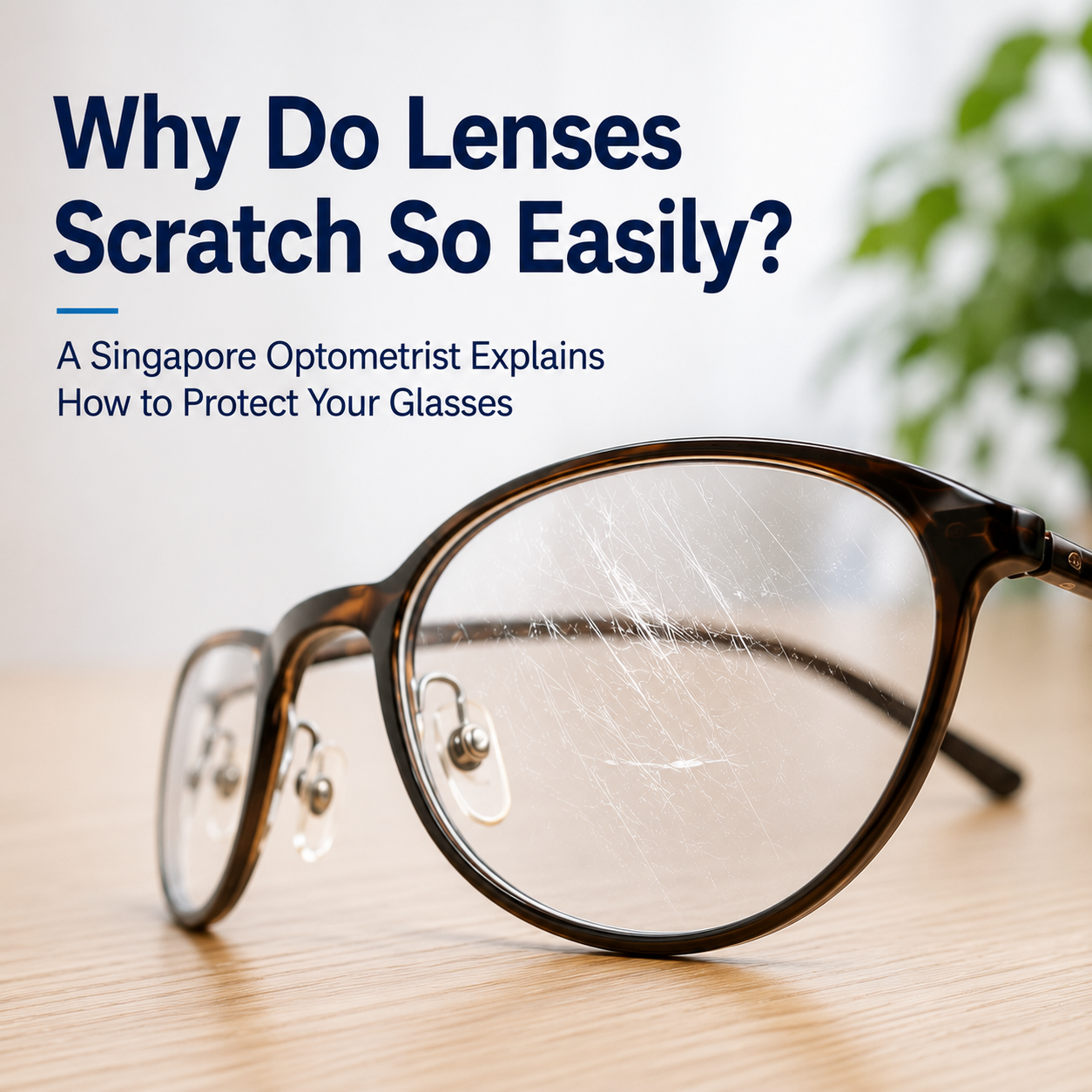
A Singapore Optometrist Explains How to ProtectYour Glasses
You invest in a new pair of glasses expecting them to stay crystal clear for years, yet tiny scratches seem to appear sooner than expected. If you've ever wondered "Why do my glasses scratch so easily?" you're certainly not alone.
This is one of the most common questions we hear from spectacle wearers in Singapore.
The reassuring news is that scratches usually don't indicate poor-quality lenses. Instead, they are often caused by everyday habits that gradually wear down the lens surface over time. Understanding why scratches happen and how to prevent them can significantly extend the life of your spectacles and maintain clearer vision.
What Do Lens Coatings Actually Do?
Most modern spectacle lenses are made from lightweight plastic materials rather than traditional glass. Plastic lenses are safer, lighter, and more comfortable to wear, making them the preferred choice for most people in Singapore.
Because plastic is naturally softer than glass, manufacturers apply specialised coatings to improve durability and visual performance.
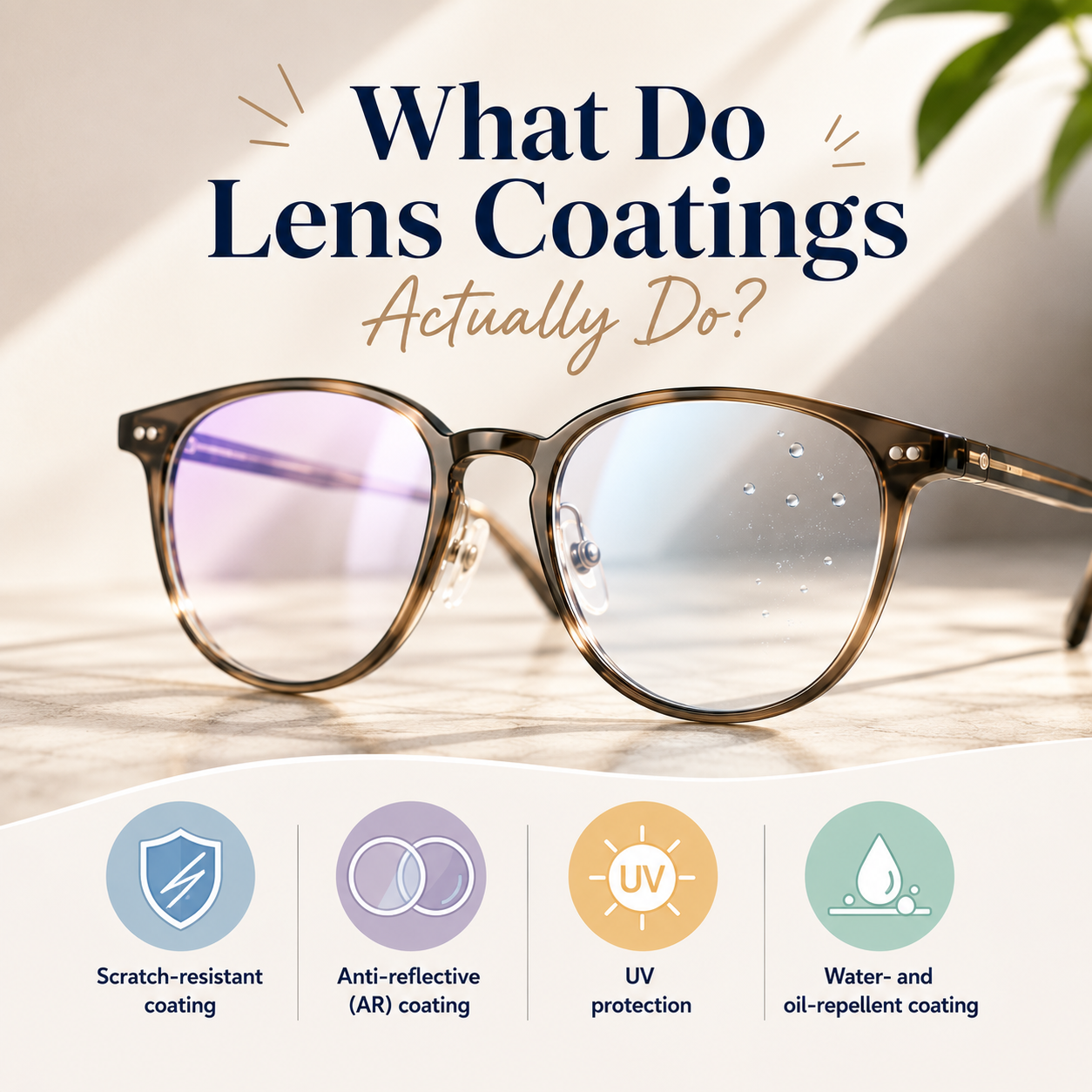
Common lens coatings include:
- Scratch-resistant coating
- Anti-reflective (AR) coating
- UV protection
- Water-and oil-repellent coating
These coatings improve your everyday visual experience, but it's important to understand that they reduce the risk of scratches, they do not completely prevent them.
A useful comparison is a smartphone screen protector. It offers additional protection against daily wear but cannot stop every scratch if abrasive particles rub against the surface.
Why "Scratch-Resistant" Doesn't Mean Scratch-Proof
One of the biggest misconceptions is that scratch-resistant lenses cannot be scratched.
In reality, scratch-resistant simply means the lenses are more resistant than uncoated lenses. Every spectacle lens available today can still develop scratches under the right conditions.
Tiny particles such as
- Dust
- Sand
- Dirt
- Dried debris
can behave like fine sandpaper when rubbed across the lens surface.
Even premium coatings eventually show signs of wear after repeated exposure to these particles. That's why good cleaning habits remain just as important as choosing high-quality lenses.
Everyday Habits That Cause Most Lens Scratches
Many scratches happen gradually during everyday use rather than from major accidents.
Dry Wiping Dirty Lenses
Dust and grit trapped on the lens can scratch the surface when wiped without rinsing first.
Cleaning with Shirts or Tissues
Shirt sleeves, tissues, paper towels, and napkins may seems oft, but their fibres can slowly wear away protective coatings over time.
Placing Glasses Face Down
Leaving spectacles with the lenses touching tables, desks, or countertops greatly increases the chance of fine scratches.
Keeping Glasses with Keys or Coins
Carrying spectacles loose inside a handbag, backpack, or pocket allows hard objects to rub directly against the lenses.
Using a Dirty Microfibre Cloth
A microfibre cloth only works when it's clean. Dirt trapped inside the cloth can repeatedly scratch your lenses every time you wipe them.
How to Clean Glasses Properly in Singapore's Humid Climate
Singapore's weather creates unique challenges for spectacle wearers.
Humidity, perspiration, facial oils, rain, and constant movement between outdoor heat and air-conditioned environments leave lenses covered with smudges. This often encourages frequent cleaning—which, if done incorrectly, increases the risk of scratches.
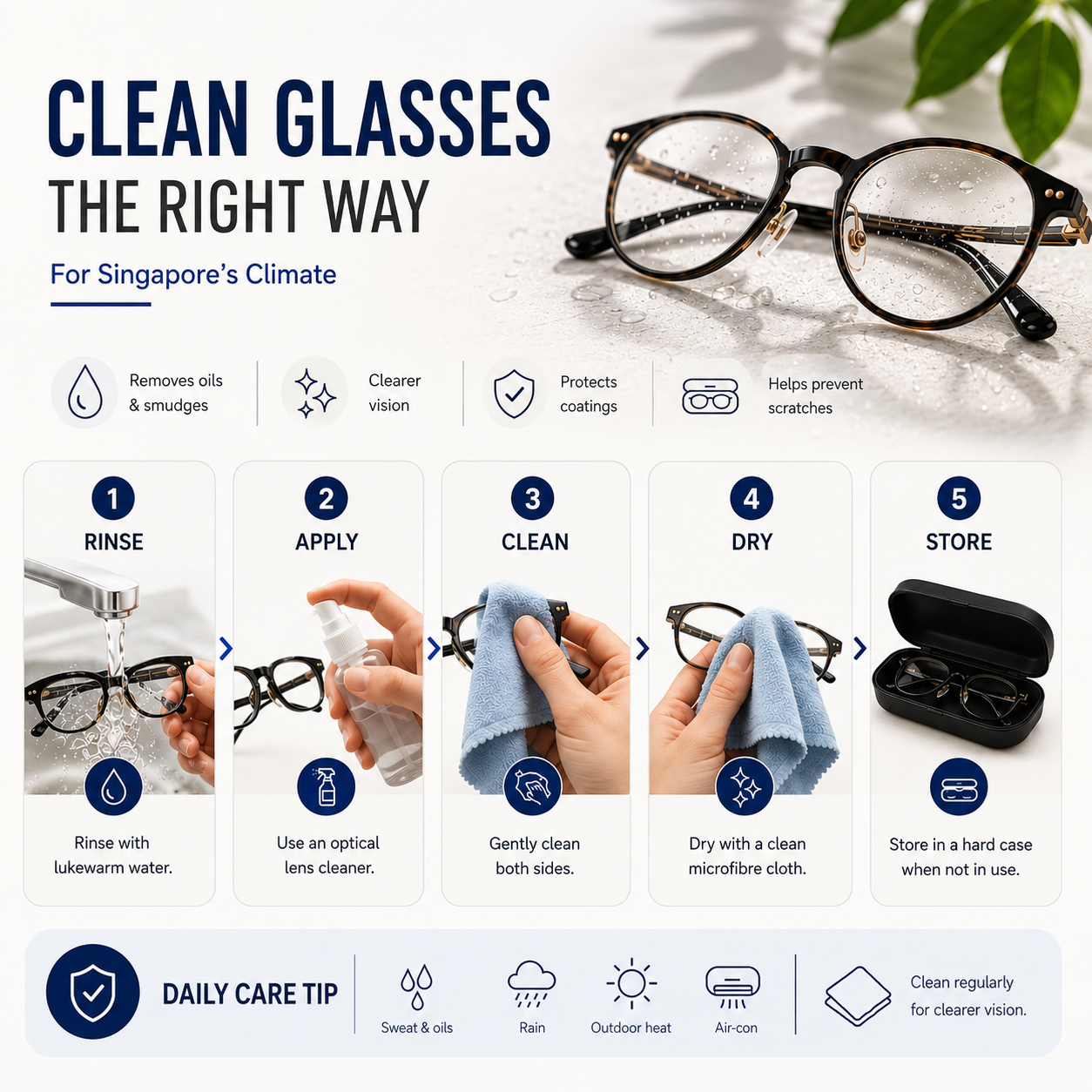
For safer cleaning:
- Rinse your lenses with lukewarm water first.
- Apply an optical lens cleaner.
- Gently clean both sides of each lens.
- Dry with a clean microfibre cloth.
- Store your spectacles in a protective hard case when not in use.
Avoid household cleaning sprays, window cleaners, alcohol-based products, or hot water, as these may damage lens coatings.
Remember to wash your microfiber cloth regularly to remove accumulated dirt and oils.
When Should Scratched Lenses Be Replaced?
Not every scratch requires replacing your lenses.
Small scratches around the edge often have little impact on vision.
However, it may be time to replace your lenses if you notice:
- Scratches directly in your line of sight
- Increased glare, especially at night
- Difficulty driving after dark
- Blurry or hazy vision
- Eye strain or visual discomfort
Sometimes what appears to be a scratch is actually deterioration of the anti-reflective coating rather than damage to the lens itself. Our team can determine the difference and recommend the most appropriate solution.
Protect Your Glasses with Better Everyday Habits
Although no spectacle lens is completely scratch proof, many scratches are preventable with proper care.
Simple habits such as rinsing lenses before wiping, using a clean microfiber cloth, storing spectacles in a protective case, and avoiding abrasive cleaning materials can help keep your lenses clearer for longer.
At People's Optics, our optometrists can assess whether your lenses have superficial scratches, coating damage, or requirere placement. We can also recommend lens materials and premium coatings that best suit your lifestyle, whether you wear your glasses for office work, driving, or everyday activities.
Book an Eye Care Consultation at People's Optics
If your glasses have become scratched, blurry, or difficult to use, visit People's Optics for a professional assessment.
Our experienced optometrists will evaluate your lenses, explain whether replacement is necessary, and help you choose durable lens options that fit your daily needs.