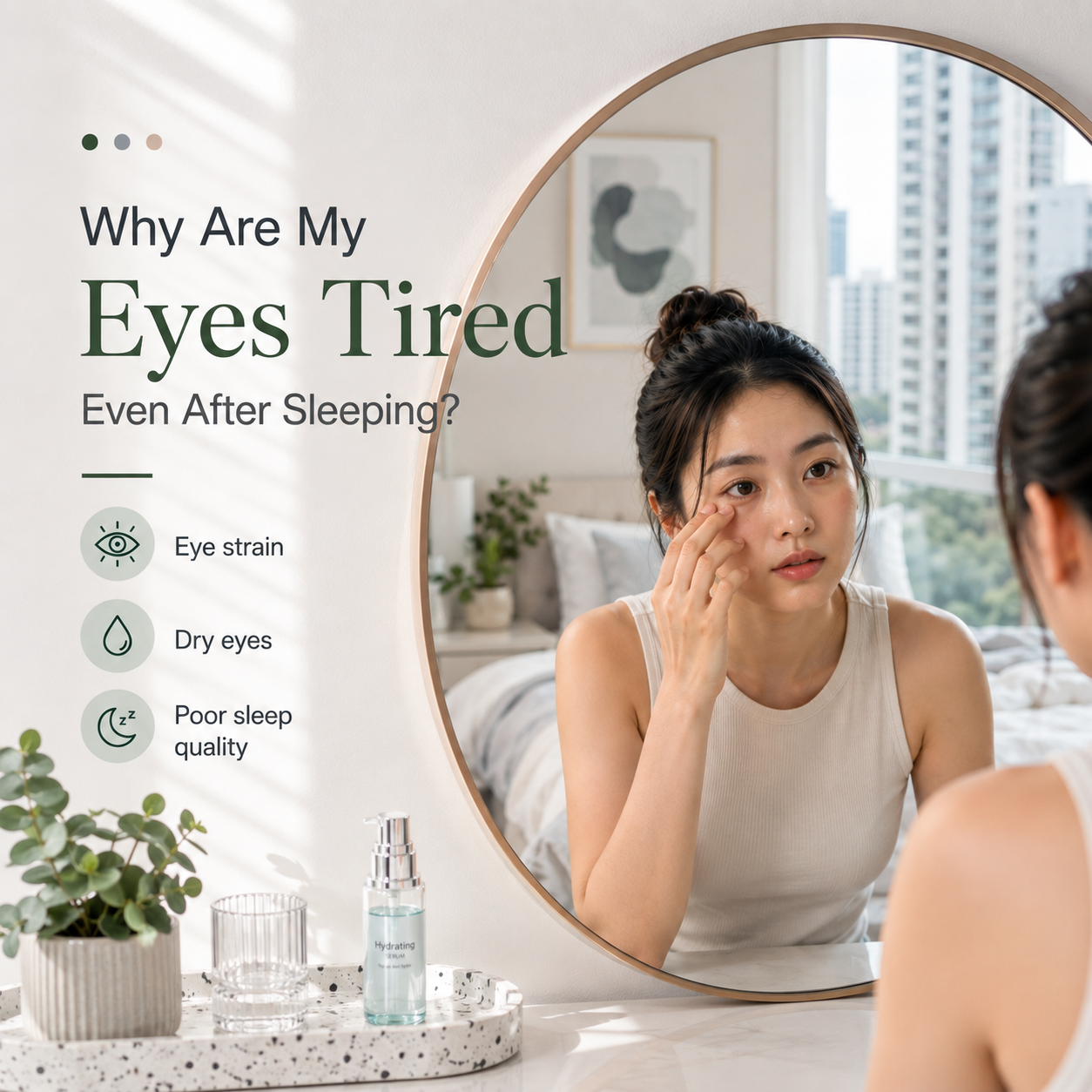
Have you ever had a full night’s sleep but still woken up with eyes that feel heavy, dry, strained, or uncomfortable?
It is easy to assume that tired eyes simply mean you need more rest. However, if your eyes regularly feel tired even after sleeping well, the cause may be related to dry eyes, digital eye strain, prolonged near work, changes in your prescription, or the environment around you.
For people in Singapore who spend much of the day using computers and smartphones or working in air-conditioned environments, these factors can become especially noticeable.
Why Do My Eyes Feel Tired Even After Sleeping?
Sleep allows your eyes to rest, but it does not necessarily remove the factors causing eye fatigue during the day.
Your eyes constantly focus, move, blink, and work together to maintain clear and comfortable vision. If they are under additional visual demand—or the surface of your eyes becomes dry—you may continue to experience eye fatigue despite getting enough sleep.
Common symptoms include:
- Heavy or tired-feeling eyes
- Dry, gritty, or irritated eyes
- Blurred or fluctuating vision
- Difficulty focusing
- Headaches after prolonged visual tasks
- Eye discomfort during screen use
Understanding when these symptoms occur can help identify possible contributing factors.
1. Digital Eye Strain from Long Hours on Screens
One of the most common reasons for tired eyes is prolonged digital device use.
Many working adults in Singapore spend hours moving between computers, smartphones, tablets, and other digital screens.
Extended screen use can place continuous demands on your visual system, particularly when you are concentrating at close distances for long periods without breaks.
By the end of the working day, you may experience eye fatigue, blurred vision, headaches, dryness, or difficulty maintaining focus.
Try the 20-20-20 Rule
During prolonged screen use, take regular visual breaks.
Every 20 minutes, look at something approximately 20 feet away for at least 20 seconds. This gives your eyes an opportunity to relax from continuous near focusing.
2. Dry Eyes Can Make Your Eyes Feel Constantly Tired
Tired eyes are not always caused by focusing effort. Sometimes, the surface of the eyes is uncomfortable.
When concentrating on digital screens, blinking may become less frequent or incomplete. Because blinking helps maintain the tear film across the surface of the eye, reduced blinking can contribute to dryness and irritation.
You may experience:
- Burning or stinging
- A gritty sensation
- Watery eyes
- Intermittent blurred vision
- Heavy or tired eyes
In Singapore, frequent exposure to air-conditionedoffices and indoor environments may make dry-eye symptoms more noticeble for some people.
If dryness continues despite regular breaks and appropriate eye care, an assessment can help determine what may be contributing to your symptoms.
3. Your Glasses Prescription May No Longer Be Right for You
You do not necessarily need dramatically blurred vision to have a change in prescription.
Even relatively small changes may mean your eyes have to work harder during reading, computer work, meetings, or driving.
You might notice:
- Eye strain later in the day
- Headaches after close work
- Difficulty maintaining clear focus
- Squinting more frequently
- Vision becoming less comfortable after prolonged screen use
If you have not had your prescription reviewed recently, an eye examination can determine whether your current glasses or contact lenses are still suitable for your visual needs.
4. Near Focusing Can Become More Difficult After 40
For adults in their 40s and beyond, presbyopia can also contribute to tired eyes during close work.
Presbyopia is a normal age-related change in which the natural lens inside the eye gradually loses flexibility. As a result, focusing on nearby objects becomes more difficult.
You may start to:
- Hold your phone farther away
- Increase the font size on your screen
- Need brighter lighting when reading
- Feel tired after prolonged close work
Appropriate near-vision correction may help make reading and digital device use more comfortable.
5. Your Working Environment May Be Affecting Your Eyes
Sometimes, several small factors combine to make your eyes feel tired.
For example, working for hours in an air-conditioned office while looking at multiple screens may expose your eyes to prolonged near focusing, reduced blinking, dry air, and glare at the same time.
Consider whether your daily routine includes:
- Long periods without screen breaks
- Strong glare or reflections
- Poorly positioned monitors
- Continuous close work
- Extended time in air-conditioned environments
Improving your visual environment may help reduceunnecessary strain.
When Are Tired Eyes More Than Just Fatigue?
Occasional tired eyes after a particularly demanding day are common.
However, if your eyes regularly feel tired even after adequate sleep, or the symptoms are affecting your work, reading, driving, or daily comfort, it may be worth having them assessed.
Consider booking an eye examination if you experience persistent eye fatigue together with:
- Blurred or fluctuating vision
- Frequent headaches
- Ongoing dryness or irritation
- Difficulty focusing
- Increasing sensitivity to light
- Changes in your usual vision
Sudden vision changes, significant eye pain, or other unusual visual symptoms should receive prompt professional attention.
Can an Eye Examination Find the Cause of Tired Eyes?
A comprehensive eye examination looks beyond whether you can simply read the letters on an eye chart.
Depending on your symptoms and findings, an optometrist can assess your vision prescription, focusing demands, binocular vision, eye health, and other factors that may be contributing to visual discomfort.
This can help distinguish between everyday eye fatigue and symptoms that may require additional attention.
Tired Eyes Despite Enough Sleep? Look Beyond Your Sleep Routine
If you are sleeping well but your eyes still feel tired, simply getting more rest may not address the underlying cause.
Your screen habits, tear-film comfort, prescription, focusing demands, age-related vision changes, and working environment may all play a role.
Pay attention to when your symptoms appear and what activities make them worse. This information can be useful when discussing your symptoms with an optometrist.
Book an Eye Examination at People’s Optics Singapore
If tired, dry, or strained eyes keep returning despite adequate sleep, consider a comprehensive eye examination at People’s Optics.
Our optometrists can assess your vision and eye health, review your current prescription, and help identify factors that may be contributing to persistent eye fatigue.
Book an eye examination at People’s Optics in Fajar, Yishun, or Tampines, Singapore, and find out what may be causing your eyes to feel tired even after a good night’s sleep.