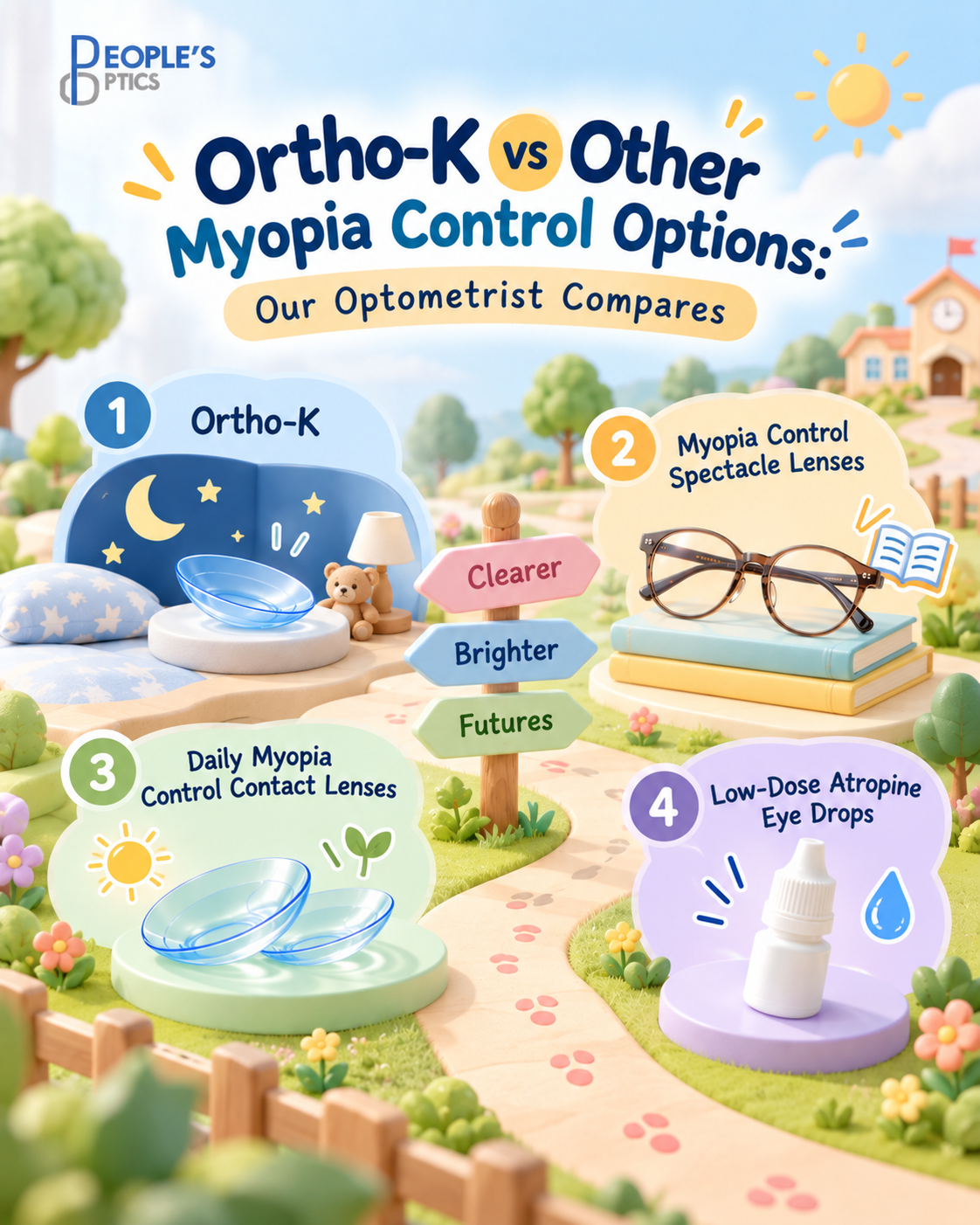
When a child’s myopia is progressing, one of the most common questions parents ask is: “Which myopia control option is best for my child?”
Ortho-K is a well-known option, but it is not the only approach available. Depending on the child, myopia control spectacle lenses, daily myopia control contact lenses, or low-dose atropine eye drops may also be considered.
So how do these options compare?
We asked our optometrist to explain the differences and why choosing a myopia management approach is less about finding the “best” treatment and more about finding one that suits the individual child.
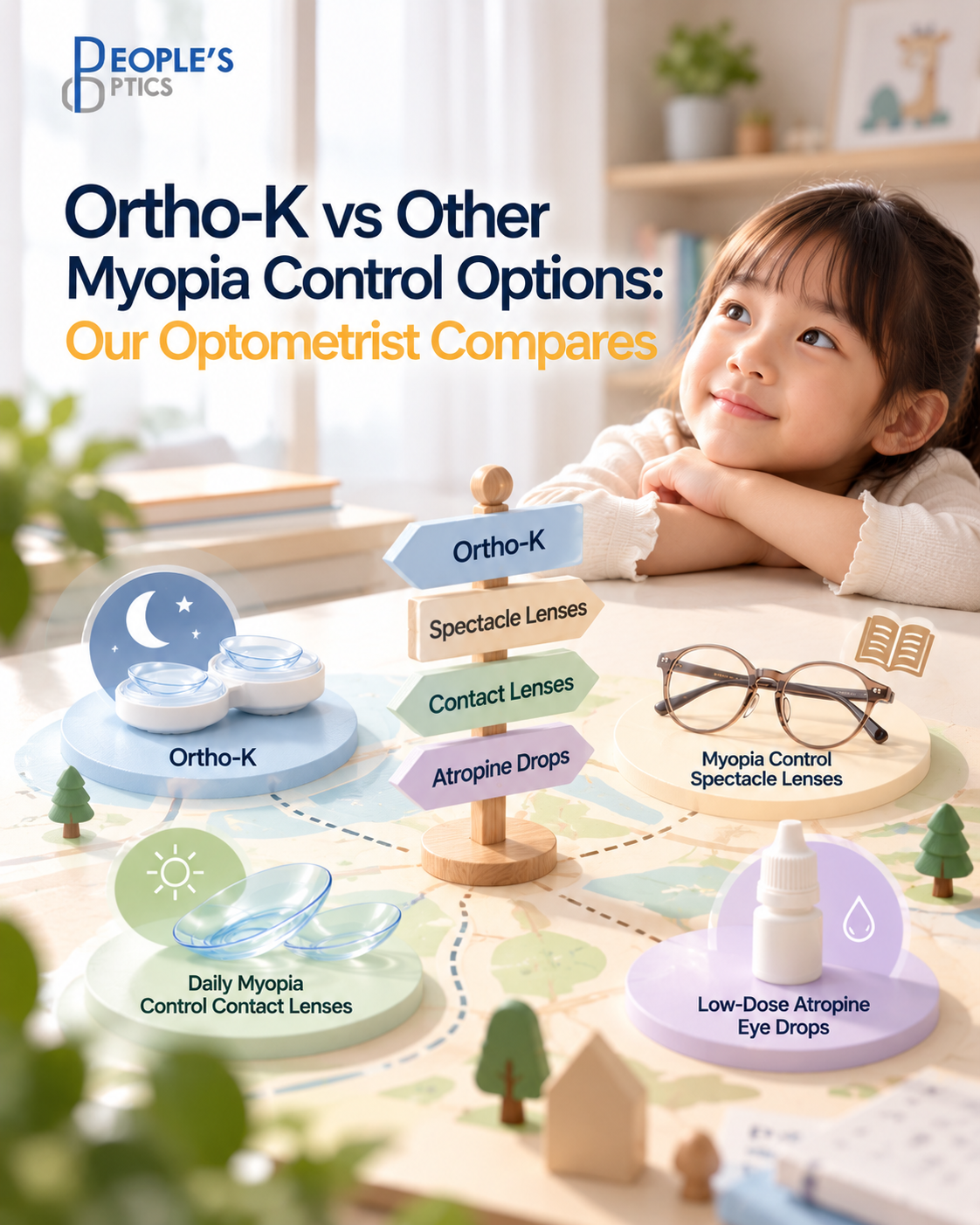
Q: Is Ortho-K the Best Myopia Control Option?
Optometrist: Not necessarily. There is no single option that is best for every child.
Children differ in their age, prescription, rate of myopia progression, eye health and lifestyle. Some are comfortable wearing contact lenses, while others may prefer spectacles. Family routines and the child’s ability to follow treatment consistently also matter.
That is why a professional myopia assessment is important before deciding which approach to consider.
Q: How Does Ortho-K Work?
Optometrist: Ortho-K uses specially designed rigid contact lenses that are worn overnight and removed in the morning.
The lenses temporarily reshape the cornea, providing clearer vision during the day without glasses or daytime contact lenses. For suitable children, Ortho-K can also help slow myopia progression.
This may appeal to active children who play sports or prefer freedom from glasses during the day.
However, Ortho-K requires careful cleaning, good hygiene and regular professional follow-ups, especially because the lenses are worn while sleeping.
Q: What About Myopia Control Spectacle Lenses?
Optometrist: Myopia control spectacles can be apractical option, particularly for children who are already comfortable wearing glasses.
Unlike standard single-vision lenses, specific myopia control spectacle lenses use specialized optical designs to provide clear vision while helping to slow myopia progression.
They do not require contact lens handling or an overnight lens routine, which can make them easier for some families to manage.
However, consistent wear is important for the prescribed myopia management approach.
Q: How Are Daily Myopia Control Contact Lenses Different?
Optometrist: These are soft contact lenses worn during the day and removed at night.
Specific myopia control contact lenses are designed to correct vision while also helping to slow myopia progression. Daily disposable options provide a fresh pair each day and do not require overnight cleaning or storage.
They may suit children who want freedom from glasses for school, sports or other activities.
Age alone does not determine whether a child is ready for contact lenses. We also consider hygiene, maturity, motivation, eye health and whether the child can handle the lenses safely.
Q: What About Low-Dose Atropine?
Optometrist: Low-dose atropine eye drops are another option used in childhood myopia management.
Unlike Ortho-K, spectacles or soft contact lenses, atropine does not provide vision correction. Children will usually still need appropriate glasses or contact lenses to see clearly.
For some families, using eye drops may fit easily into the child’s routine. However, the appropriate concentration and treatment plan should be determined and monitored by the relevant eye-care professional.
Q: How Do You Decide Which Option May Suit a Child?
Optometrist: We look at more than just the child’s prescription.
A myopia assessment may consider:
- Age and current prescription
- How quickly the myopia is progressing
- Eye health and contact lens suitability
- Daily activities and sports
- Hygiene and maturity
- Comfort with glasses, contact lenses or eye drops
- Ability to follow the management plan consistently
For example, a child who is active in sports and comfortable handling contact lenses may have different needs from a younger child who prefers wearing spectacles.
The most appropriate option should balance myopia control, eye health, lifestyle and practicality.
Q: Can the Myopia Management Plan Change OverTime?
Optometrist: Yes. Myopia management is an ongoing process rather than a one-time decision.
As children grow, their prescription, lifestyle and needs may change. Regular follow-ups allow the optometrist to monitor myopia progression and review whether the current approach remains suitable.
If myopia continues to progress, the management plan may need to be reassessed and adjusted based on the child’s individual situation.
There Is No One-Size-Fits-All Myopia Control Option
There is no single myopia control option that suits every child. The most appropriate approach depends on the child’s eyes, age, myopia progression and lifestyle.
At People’s Optics, our optometrists assess your child’s vision, eye health, myopia progression and everyday needs before discussing suitable myopia management options.
📍 Visit People’s Optics at Yishun or Tampines, Singapore, for a professional myopia assessment and discussion with our optometrist.