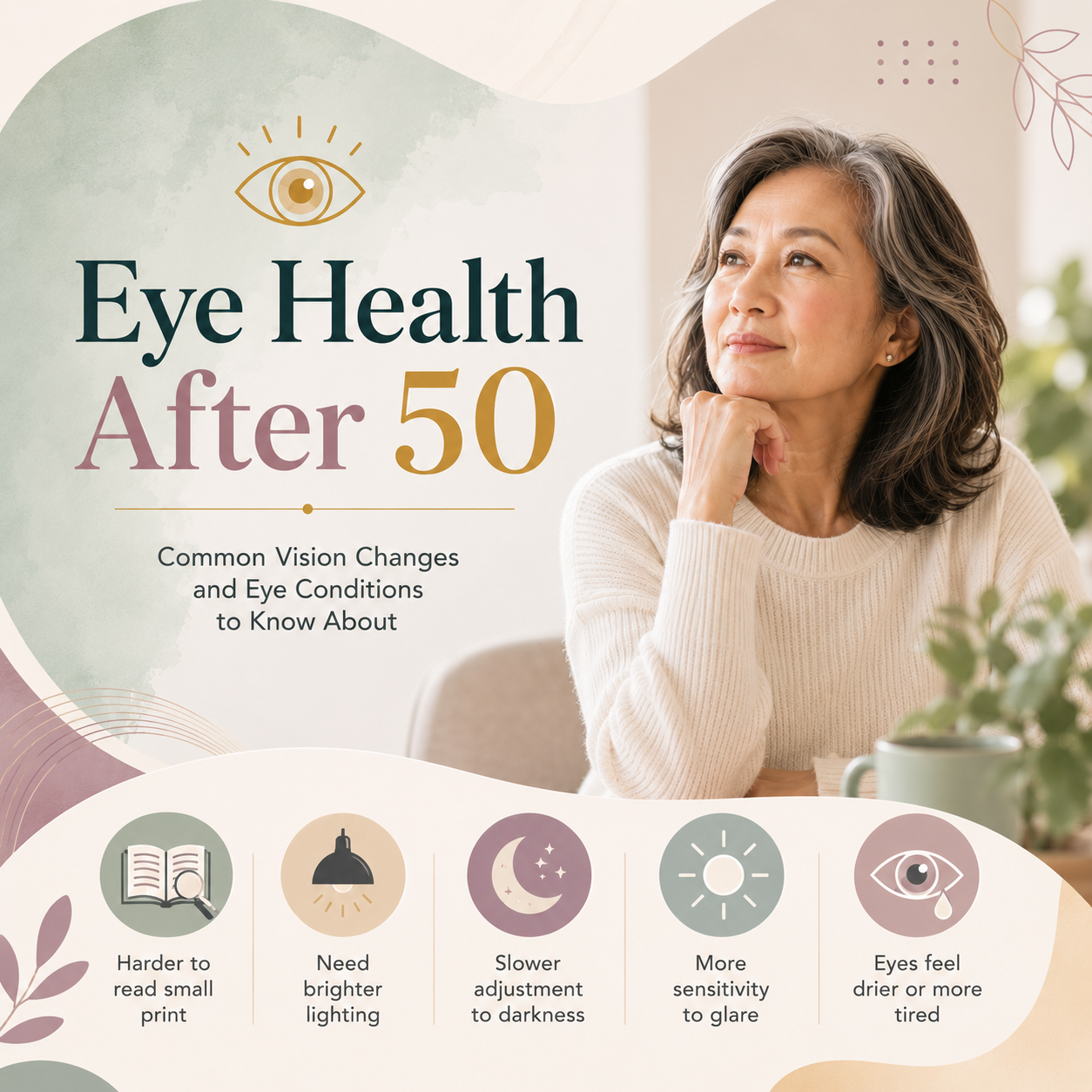
Your vision can change in many ways after the age of 50. Perhaps you need to hold your phone farther away, use brighter light when reading, or find that glare from headlights is more noticeable when driving at night.
Some of these changes are a normal part of ageing. Others may be related to eye conditions that become more common as we get older.
Three important conditions to be aware of are cataracts, age-related macular degeneration (AMD), and glaucoma.
Knowing what changes to expect—and which symptoms deserve closer attention—can help you make informed decisions about your eye health.
What Happens to Your Eyes After 50?
Ageing affects several parts of the visual system.
The natural lens inside the eye gradually becomes less flexible, focusing on close distances becomes more difficult, and your eyes may require more light for detailed tasks.
You may notice:
- Small print is harder to read
- You need brighter lighting
- Your eyes take longer to adjust to darkness
- Glare becomes more noticeable
- Your eyes feel dry or tired more easily
Many of these changes develop gradually and may be associated with normal ageing.
However, changes that significantly affect your vision—or appear suddenly—should be assessed rather than assumed to be caused by age alone.
Presbyopia: A Normal Change in Near Vision
If you are over 50 and find yourself holding your phone farther away, presbyopia is a likely reason.
Presbyopia occurs because the natural lens inside the eye gradually loses flexibility with age. This makes it harder for the eyes to focus on nearby objects.
You may need reading glasses, progressive lenses, or multifocal contact lenses to see comfortably at different distances.
Presbyopia is a normal part of ageing. However, other changes in vision may have different causes.
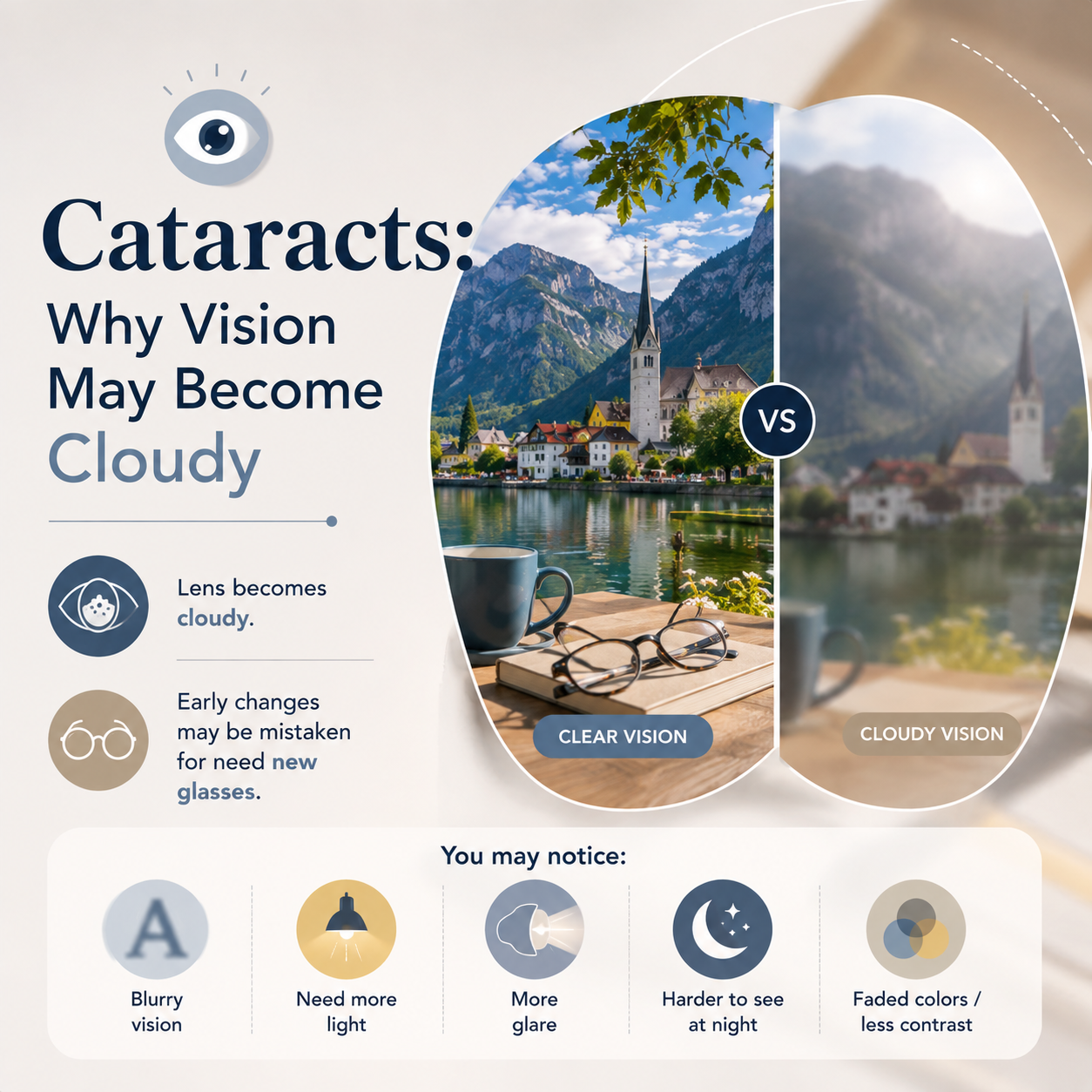
Cataracts: Why Vision May Become Cloudy
A cataract develops when the natural lens inside the eye becomes cloudy.
Because cataracts usually progress gradually, the early changes can sometimes be mistaken for simply needing a new pair of glasses.
You may notice:
- Cloudy or hazy vision
- Increased glare from lights
- Halos around headlights
- Difficulty seeing at night
- Colours appearing less vivid
- Your spectacle prescription changing more frequently
As cataracts progress, everyday activities such as reading and driving may become more difficult.
An eye examination can help determine whether changes in lens clarity may be contributing to your symptoms.
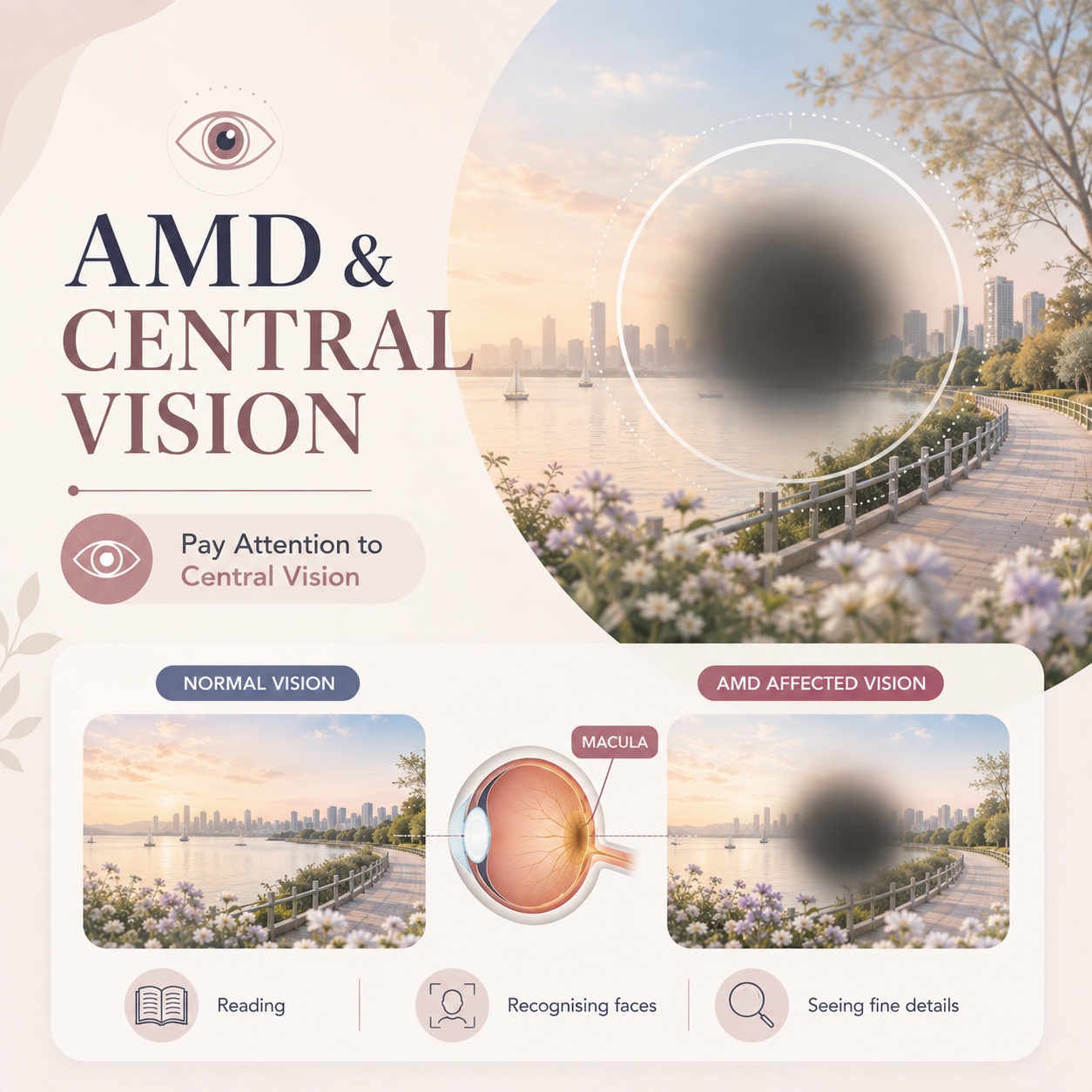
Age-Related Macular Degeneration (AMD): Pay Attention to Central Vision
The macula is the part of the retina responsible for detailed central vision.
Age-related macular degeneration, commonly known as AMD, affects this area and can interfere with tasks such as reading, recognising faces, and seeing fine details.
Possible changes include:
- Blurring in the centre of your vision
- Straight lines appearing wavy
- Difficulty seeing fine details
- A dark or blurred area in central vision
A new change in central vision should not simply be considered part of normal ageing.
If straight lines suddenly appear distorted or your central vision changes noticeably, arrange an eye assessment promptly.
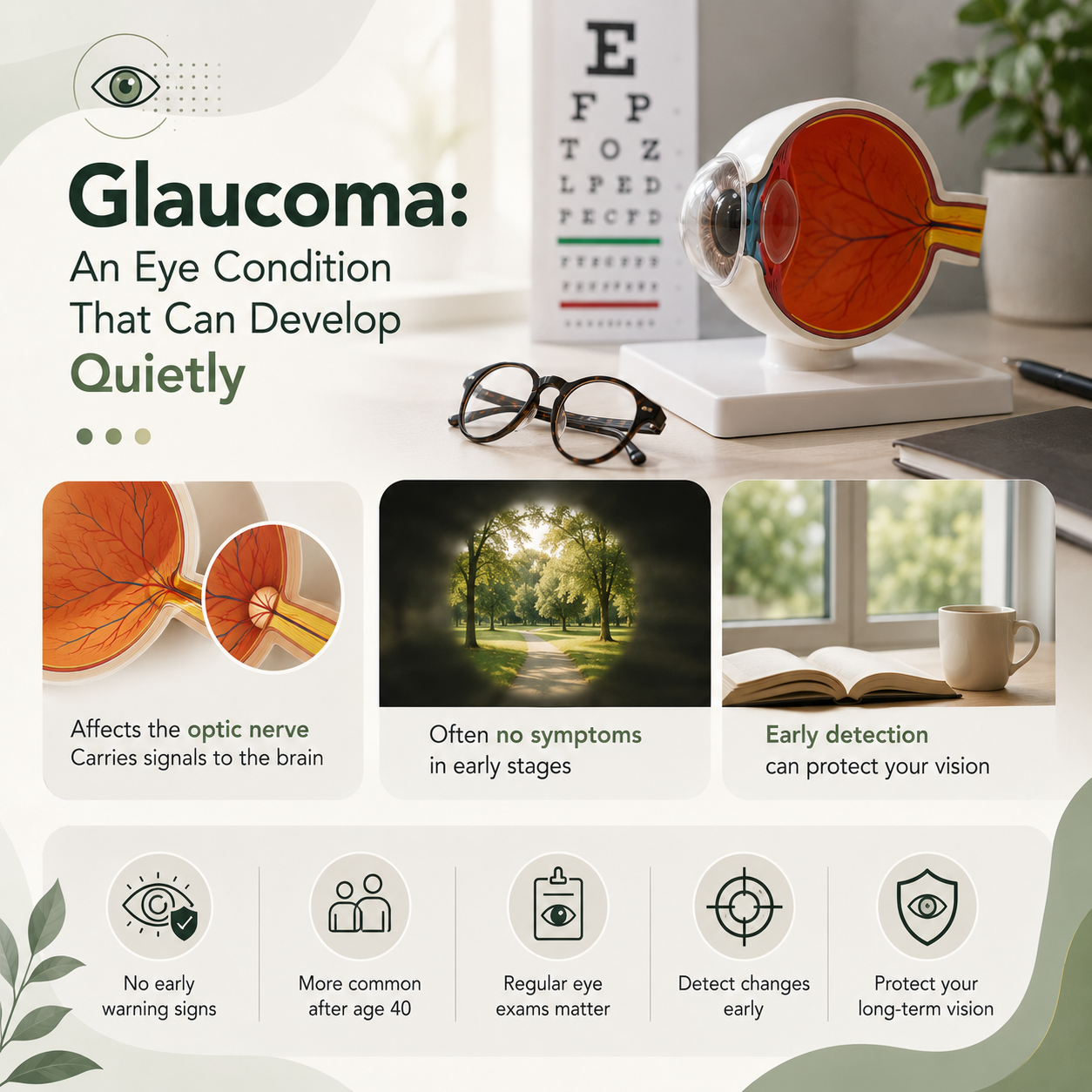
Glaucoma: An Eye Condition That Can Develop Quietly
Glaucoma affects the optic nerve, which carries visual information from the eye to the brain.
What makes glaucoma particularly important to understand is that some common forms can progress gradually without obvious symptoms in the early stages.
You may still feel that your eyesight is clear while change are developing.
As the condition progresses, peripheral or side vision may become affected.
This is one reason why eye health assessments remain important even when you have no obvious visual complaints.
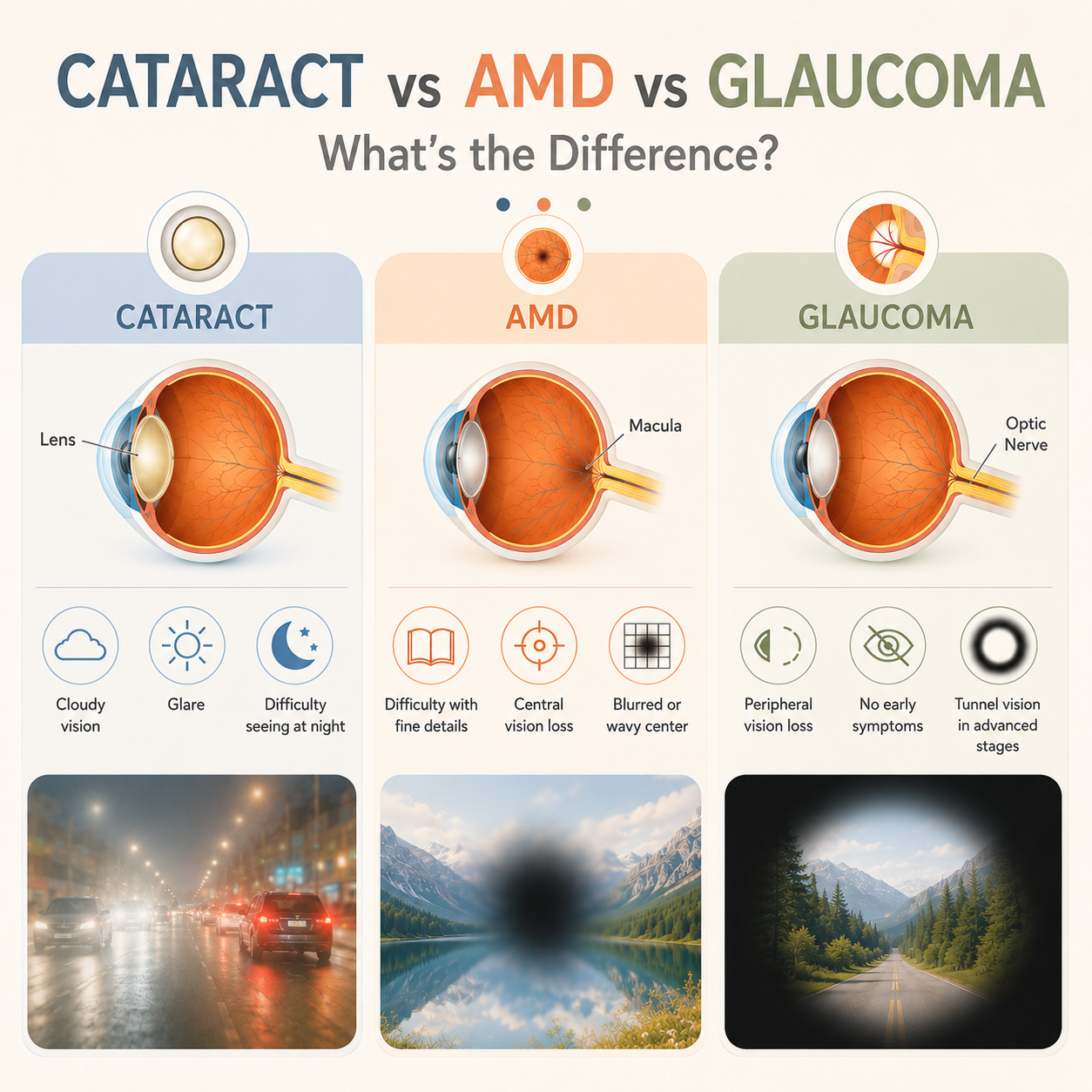
Cataract vs AMD vs Glaucoma: What’s the Difference?
Although all three conditions become increasingly relevant with age, they affect different parts of the eye.
Cataract affects the natural lens and commonly cause cloudy vision, glare, and difficulty seeing at night.
AMD affects the macula and can interfere with detailed central vision.
Glaucoma damages the optic nerve and, in some forms, may gradually affect peripheral vision without notice able early symptoms.
They are different conditions and require different approaches to assessment and management.
Which Vision Changes Should You Take Seriously?
Gradual changes such as needing reading glasses or brighter light can be expected as you age.
However, arrange professional assessment if you notice asignificant or unexplained change in your vision.
Seek prompt attention for symptoms such as:
- Sudden loss or reduction of vision
- New flashes or a sudden increase in floaters
- A shadow or curtain across your vision
- Straight lines suddenly appearing distorted
- Sudden changes in central vision
- Persistent double vision
- Significant eye pain or redness
These symptoms should not be dismissed as normal ageing.
Why Have an Eye Examination After 50?
You do not need to wait until your vision becomes blurry before having your eyes checked.
A comprehensive eye examination can assess more than your spectacle prescription. It can also evaluate different aspects of your eye health and help identify whether further investigation or referral may be appropriate.
This becomes increasingly valuable after 50 because some eye conditions may develop gradually without causing obvious symptoms initially.
Clear Vision Is Only One Part of Healthy Ageing
Being able to see clearly with your glasses does not necessarily mean that nothing has changed inside your eyes.
Understanding age-related changes, recognizing unusual symptoms, and having appropriate eye examinations can all play a role in maintaining your vision as you get older.
If you are over 50, paying attention to changes in , peripheral vision, glare, night vision, and overall visual clarity can help you recognize when it is time to have your eyes assessed.
Book an Eye Examination at People’s Optics Singapore
Have you noticed changes in your vision after 50?
At People’s Optics, our optometrists can assess your prescription and eye health, discuss any symptoms you have noticed, and advise whether further assessment or referral may be appropriate.