When was the last time you had your eyes examined? Was it because your vision became blurry, your glasses felt uncomfortable, or you simply needed a new prescription?
For many people, visiting an optical shop is something they do only when a problem arises. However, good eye care involves more than updating your glasses or contact lenses.
At People’s Optics Singapore, we believe that understanding your vision, choosing suitable solutions and reviewing your eye health over time are equally important.
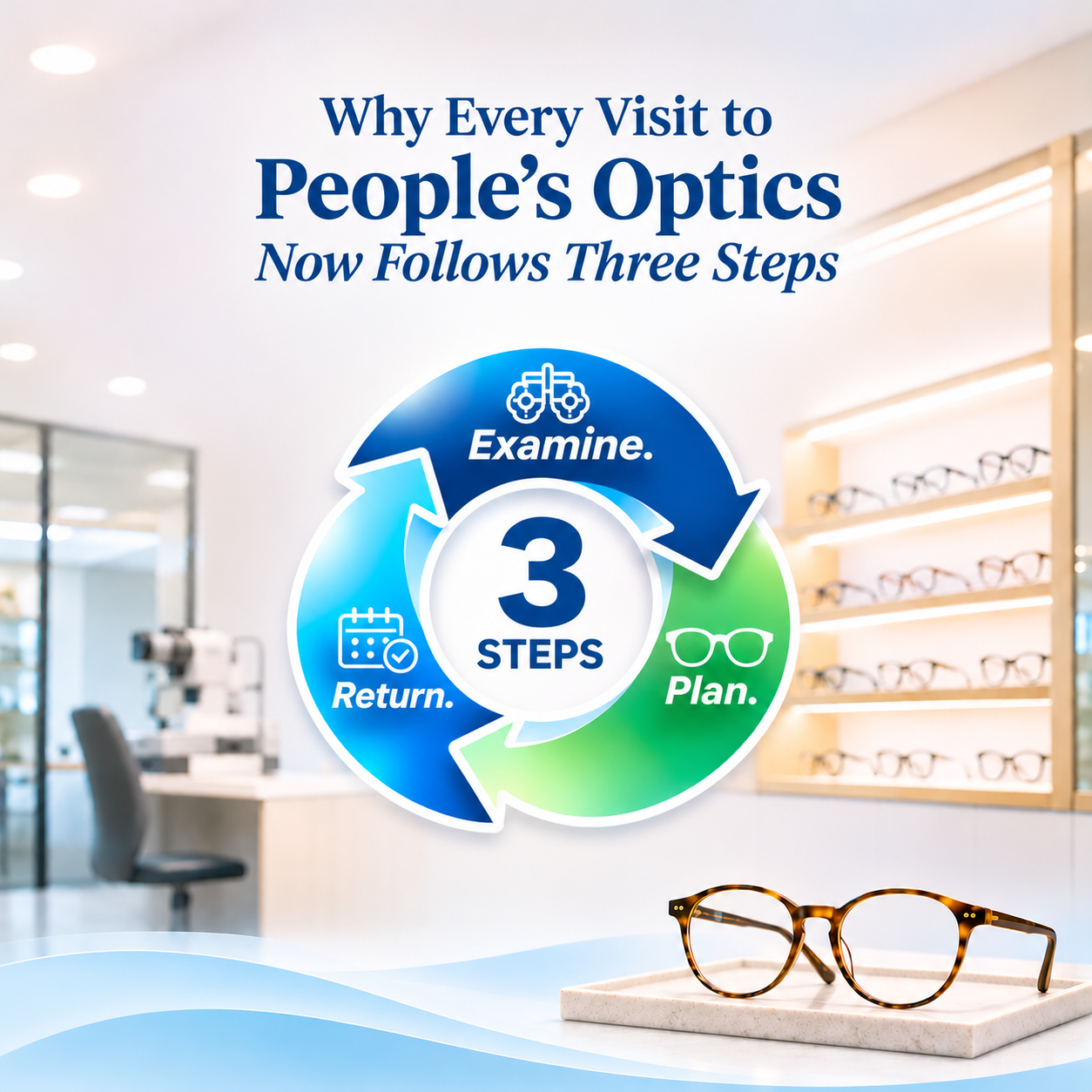
That is why our approach follows three simple steps: Examine.Plan. Return.
Together, these steps provide a more structured and personalised approach to eye care, helping you make informed decisions about your vision at every stage of life.
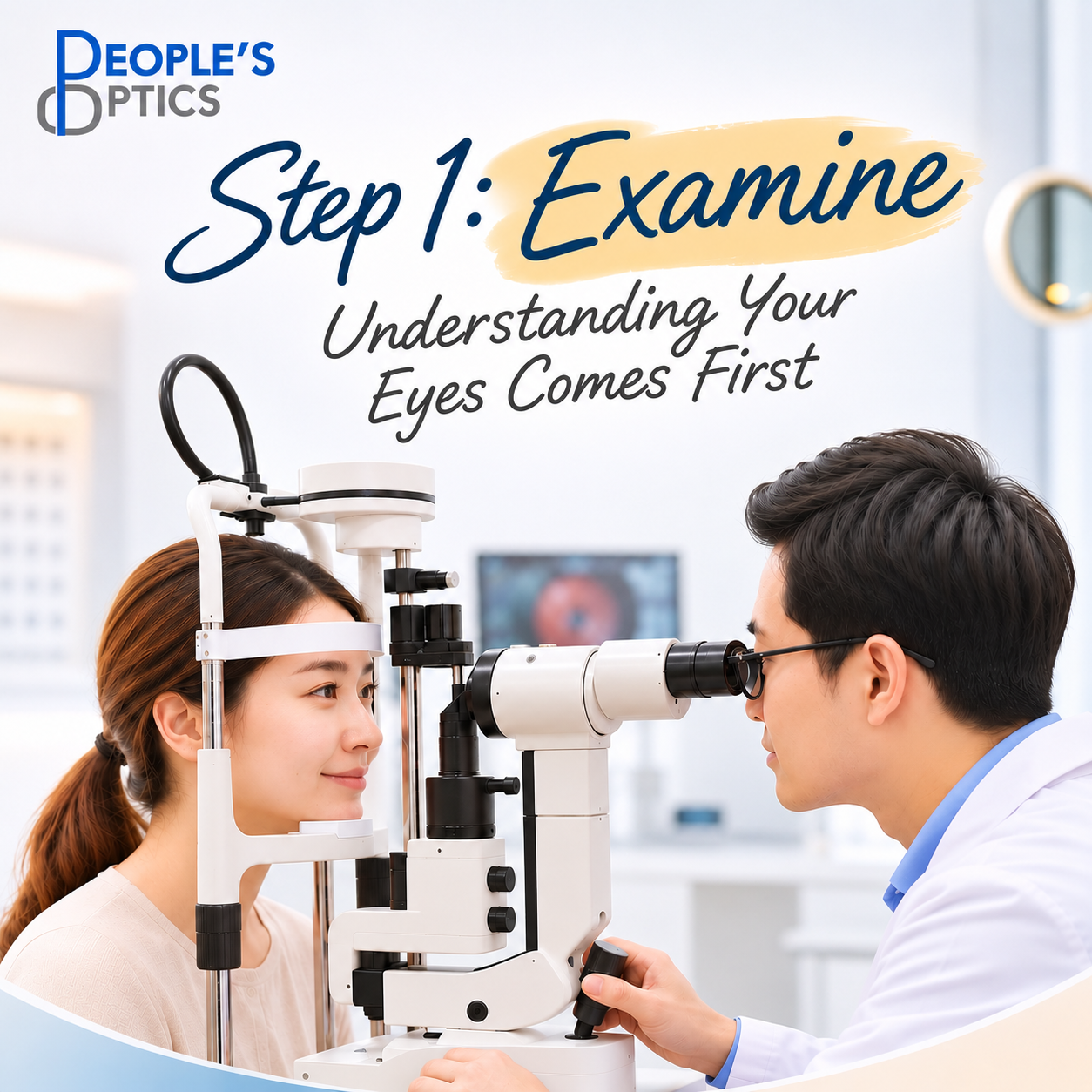
Step 1: Examine — Understanding Your Eyes Comes First
Every pair of eyes is different. A prescription that works well for one person may not be suitable for another, even if their visual concerns seem similar.
A professional eye examination goes beyond determining whether you need stronger glasses.
At People’s Optics, our optometrists take time to understand your vision, daily activities and relevant eye health concerns before recommending suitable solutions.
Depending on your individual needs, an examination may include:
- Prescription assessment: Checking your vision at different distances and identifying prescription changes.
- Eye health assessment: Evaluating relevant aspects of your eye health and identifying concerns that may require further attention.
- Visual comfort assessment: Understanding difficulties with reading, screen use or other daily activities.
- Lifestyle discussion: Considering how your work, hobbies and daily routines influence your visual needs.
For example, frequent headaches after working on a computer may be related to several factors, including uncorrected vision problems or prolonged near work.
Similarly, a child who frequently squints or sits close tothe television may benefit from a comprehensive eye examination.
The goal is simple: understand your eyes before deciding what comes next.
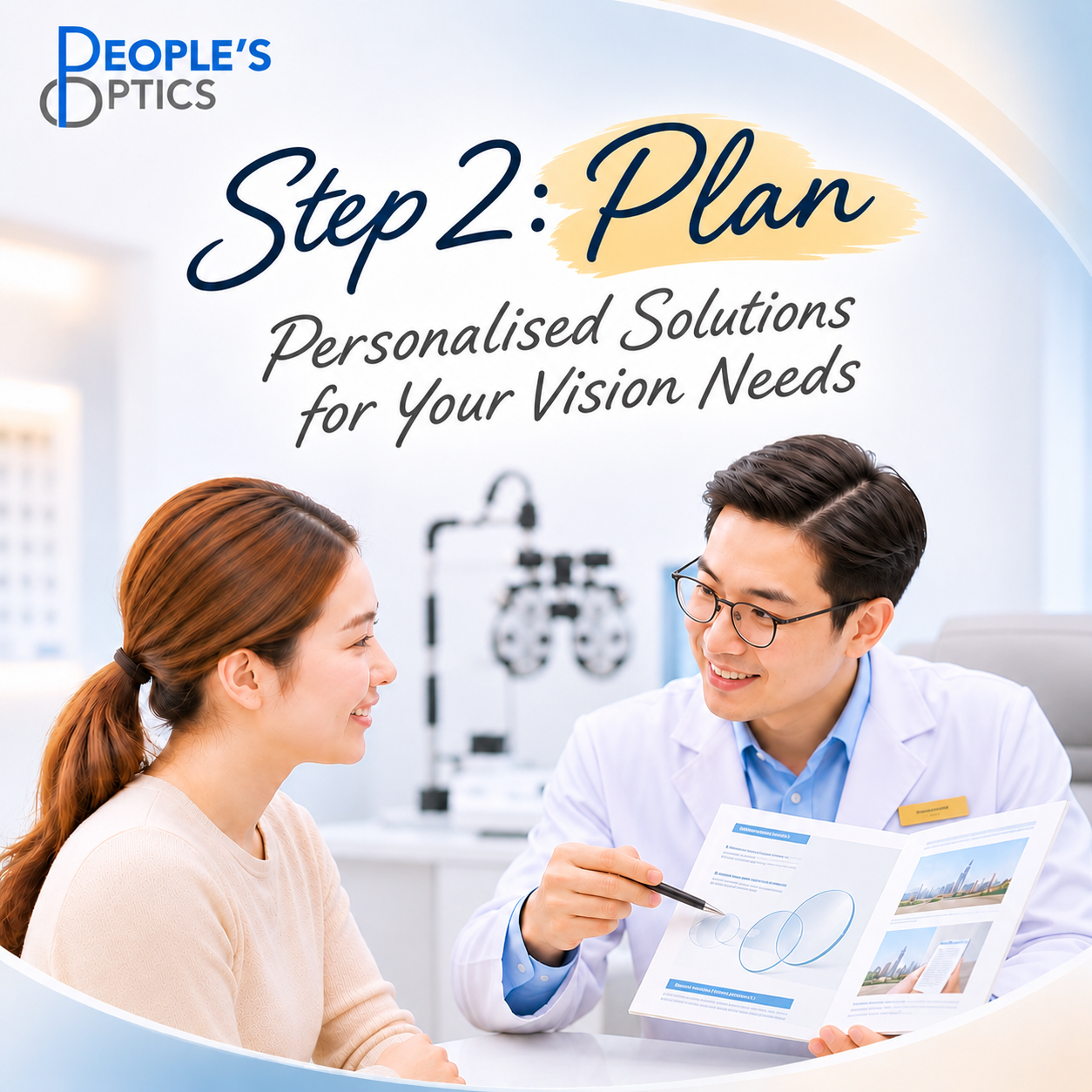
Step 2: Plan — Personalised Solutions for Your Vision Needs
Once your examination is complete, the next step is to explore suitable vision correction and eye care options.
There is no one-size-fits-all solution when it comes to eyesight. Your age, prescription, lifestyle and personal preferences all play a role in determining what may work best for you.
At People’s Optics, our optometrists help you understand the available options and how they may fit into your daily life.
For Children with Myopia
Children experiencing progressive short-sightedness may benefit from myopia management options, such as specially designed spectacle lenses, myopia control contact lenses or Orthokeratology (Ortho-K).
For Working Adults
Long hours of screen use, reading and switching between digital devices can place significant demands on your vision. Suitable prescription lenses or occupational eyewear may help improve visual comfort.
For Adults Over 40
Presbyopia, a natural age-related change in near vision, often makes reading small text more challenging. Progressive lenses or multifocal contact lenses may provide suitable options for managing different viewing distances.
For Contact Lens Wearers
A professional contact lens fitting helps determine suitable lens options while considering comfort, eye health and safe wearing habits.
Rather than recommending the same solution to everyone, the focus is on finding an approach that suits your individual needs.
Because the right vision care plan should work with your lifestyle, not against it.

Step 3: Return — Why Follow-Up Eye Care Matters
Your vision does not remain the same through out your life.
Children's prescriptions may change as they grow, adults may experience increasing difficulty with near vision and contact lens wearers may develop changes in comfort or lens tolerance.
That is why follow-up care is an important part of maintaining good vision.
Regular eye examinations and appropriate reviews allow your optometrist to monitor changes, reassess your needs and determine whether adjustments are necessary.
Follow-up visits are particularly important for:
- Children undergoing myopia management, to monitor prescription changes and treatment progress.
- Ortho-K wearers, who require scheduled reviews to assess lens fitting and corneal health.
- Contact lens wearers, to review lens comfort, fitting and eye health.
- Adults experiencing vision changes, to ensure their current eyewear continues to meet their needs.
Importantly, returning for an eye examination does not automatically mean purchasing new glasses.
If your prescription remains suitable and your existing eyewear is working well, a replacement may not be necessary.
Sometimes, the best recommendation is simply to continue with what you already have.
Eye Care That Goes Beyond a Single Visit
Good eye care should not begin and end with purchasing apair of glasses.
At People’s Optics, the Examine. Plan. Return. approach reflects our commitment to providing thoughtful, personalised vision care that considers both your current needs and future changes.
📍 Make eye care part of your routine with personalised guidance from our optometrists at People’s Optics — Yishun, Fajar or Tampines.