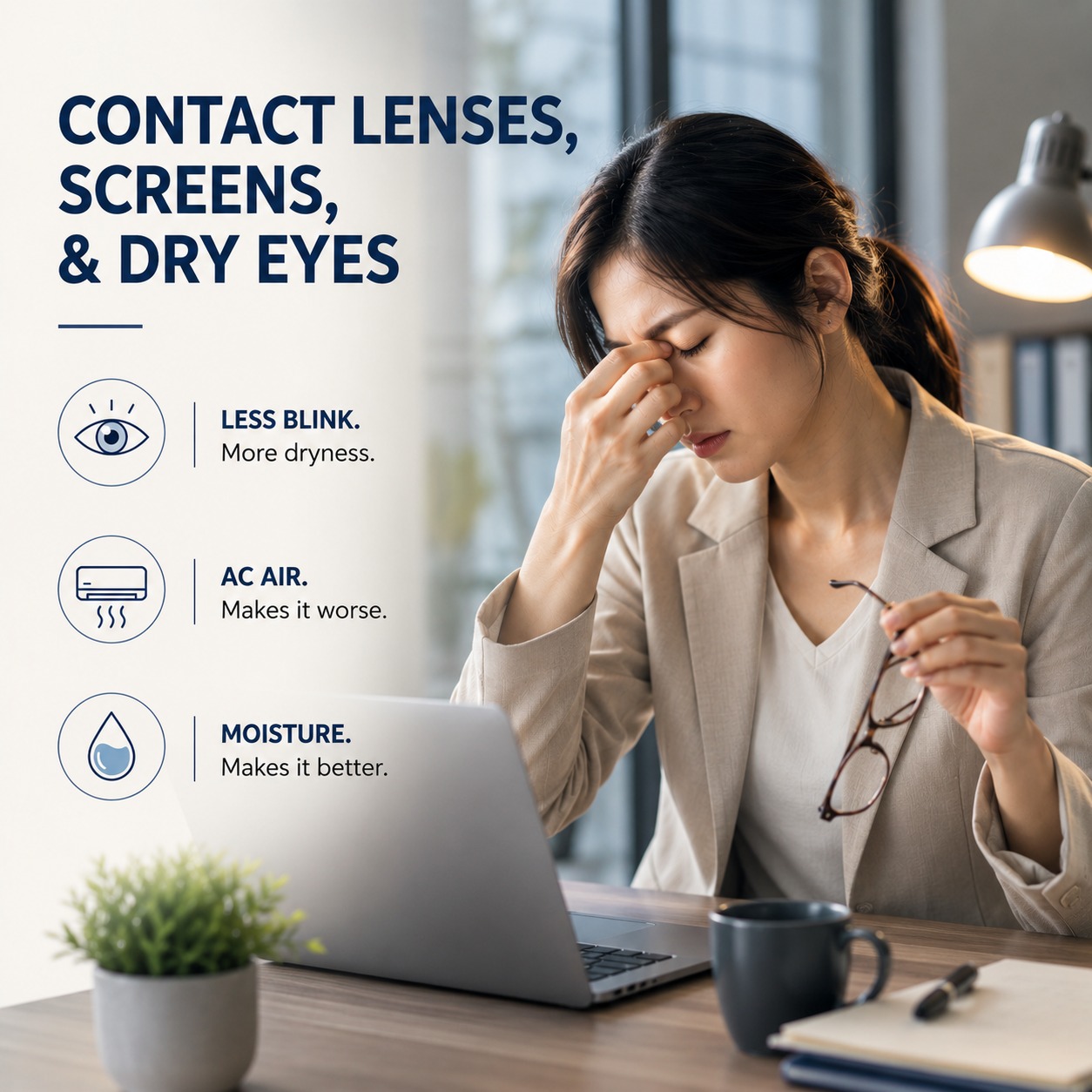
If you wear contact lenses and spend most of your day in front of a computer, you've probably experienced it before: your lenses feel comfortable in the morning, but by late afternoon your eyes feel dry, tired, or irritated.
You're not imagining it. Dryness and discomfort are among the most common concerns reported by contact lens wearers who spend long hours on screens. In Singapore's office environment—where digital work, air-conditioning, and extended screen time are part of daily life—these symptoms can become even more noticeable.
The good news is that contact lens discomfort during screen use is often manageable. Understanding why it happens is the first step towards improving comfort throughout the day.
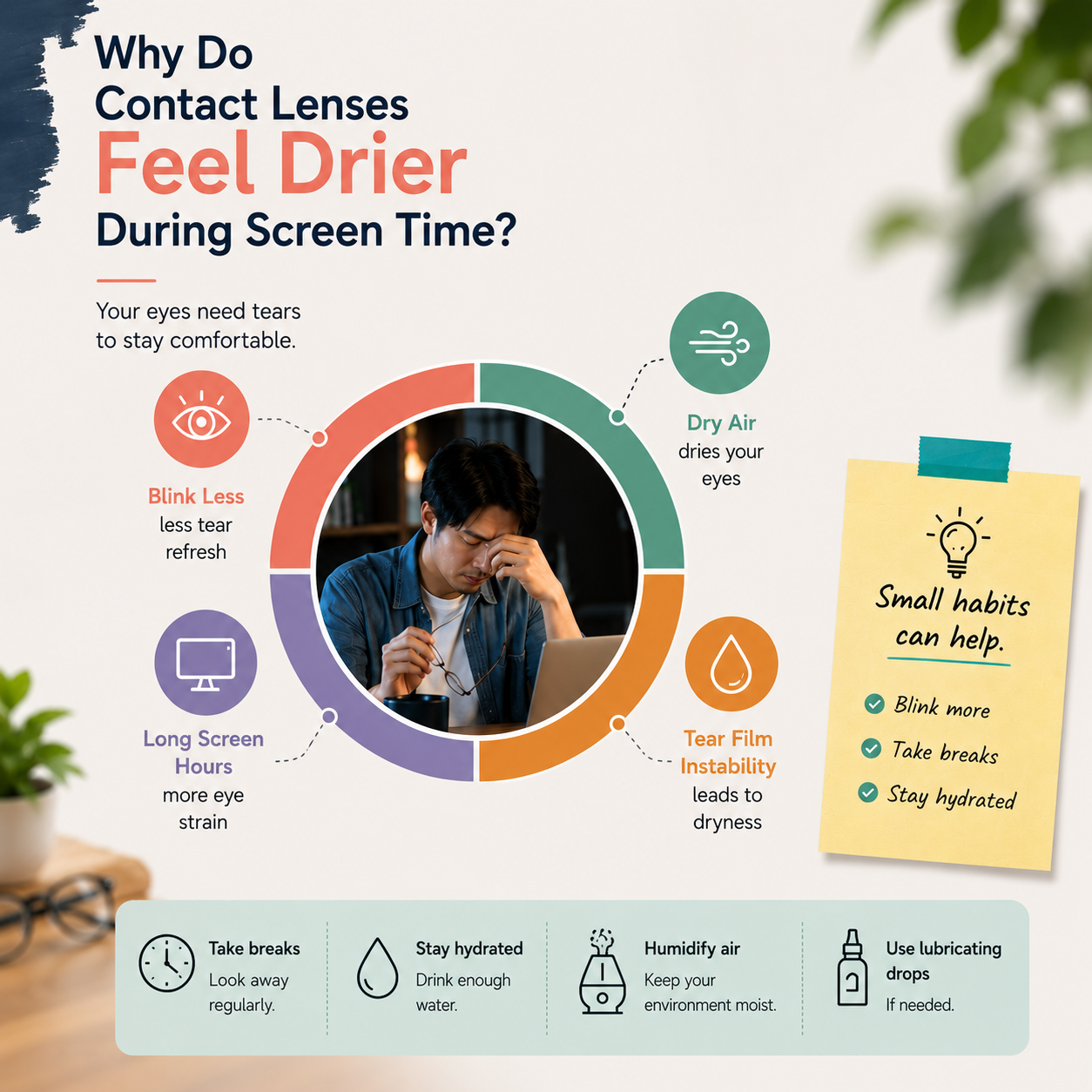
Why Do Contact Lenses Feel Drier During Screen Time?
Your eyes rely on a healthy tear film to keep the surface of the eye and your contact lenses comfortable.
When you're working on a computer, replying to emails, attending online meetings, or scrolling through your phone, your blinking pattern changes. Research has shown that people tend to blink less frequently and less completely when concentrating on digital screens.
Normally, each blink spreads a fresh layer of tears across the eye. When blinking decreases, the tear film evaporates more quickly. This can leave the eyes feeling dry and may cause contact lenses to feel less comfortable.
For many working adults, the combination of reduced blinking and contact lens wear creates a cycle of dryness that becomes more noticeableas the day progresses.
You may experience:
- Dry or gritty eyes
- Fluctuating vision
- Lens awareness
- Eye fatigue
- A need to blink more often to clear your vision
While these symptoms are common, they are not something you simply have to accept as part of wearing contact lenses.
Office workers often face several dryness triggers at the same time:
- Long periods of screen use
- Reduced blinking
- Air-conditioned environments
- Indoor air circulation from fans
- Limited opportunities to rest the eyes
Together, these factors can make contact lenses feel significantly less comfortable than they would during other activities.
If your eyes consistently feel worse in the office than they do at home or outdoors, your work environment may be contributing to the problem.
Simple Habits That Can Improve Contact Lens Comfort
Small adjustments to your daily routine can often make anoticeable difference.
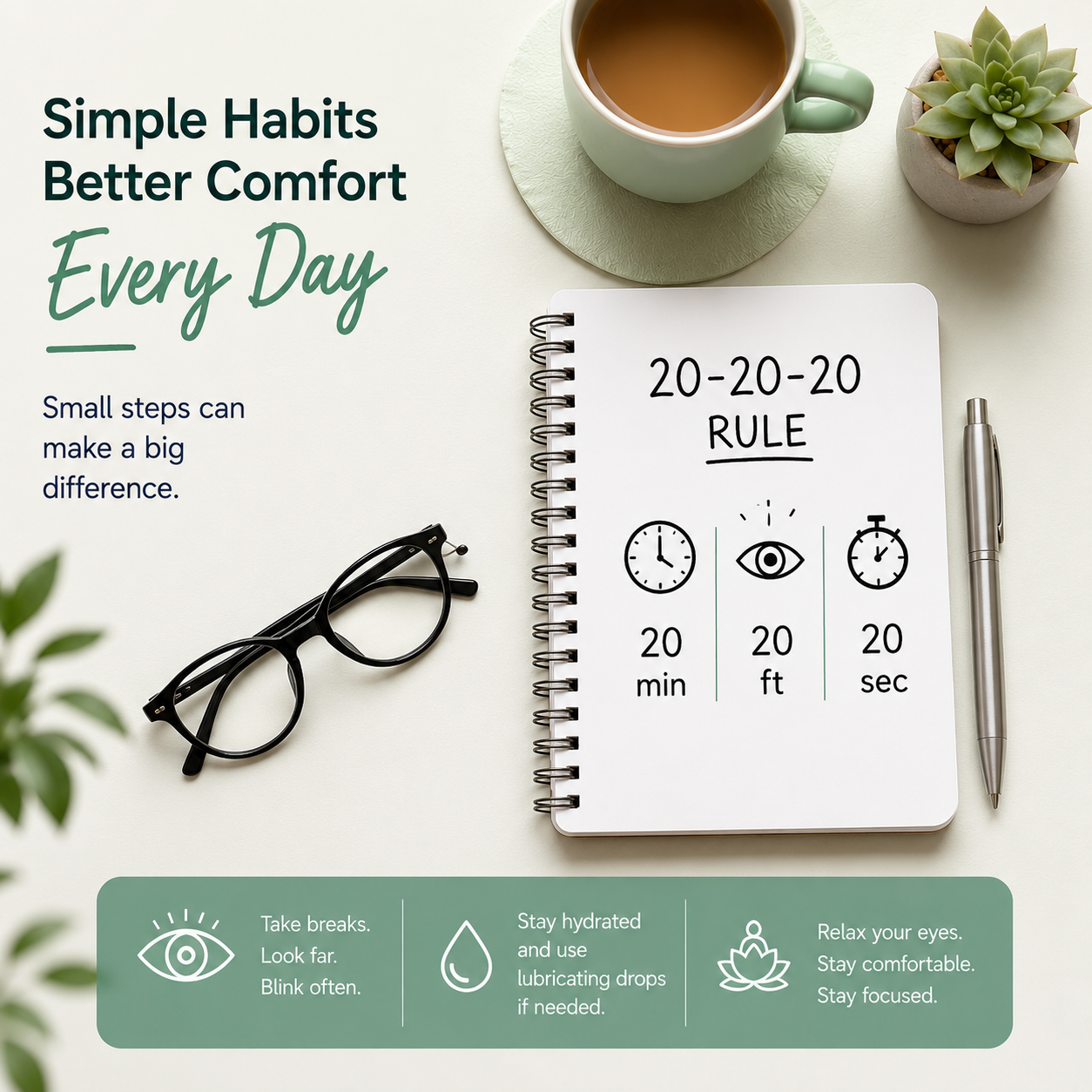
Follow the 20-20-20 Rule
Every 20 minutes, look at something approximately 20 feet away for at least 20 seconds.
This habit encourages your eyes to relax and can reduce visual fatigue during extended screen sessions.
Be More Aware of Blinking
Many people don't realize how infrequently they blink while working.
Make a conscious effort to blink fully and gently throughoutthe day. Complete blinks help spread tears evenly across the eye surface and over the contact lens.
Stay Hydrated
General hydration supports overall tear production. While drinking more water is not a cure for dry eyes, staying adequately hydrated is an important part of maintaining comfort.
Use Contact Lens-Compatible Lubricating Drops
Artificial tears designed specifically for contact lens wearers can help replenish moisture and improve comfort.
Always check that the drops are suitable for use with your particular type of contact lenses.
Adjust Your Workspace
Position your computer screen slightly below eye level if possible. This may help reduce the amount of exposed eye surface and slow tear evaporation.
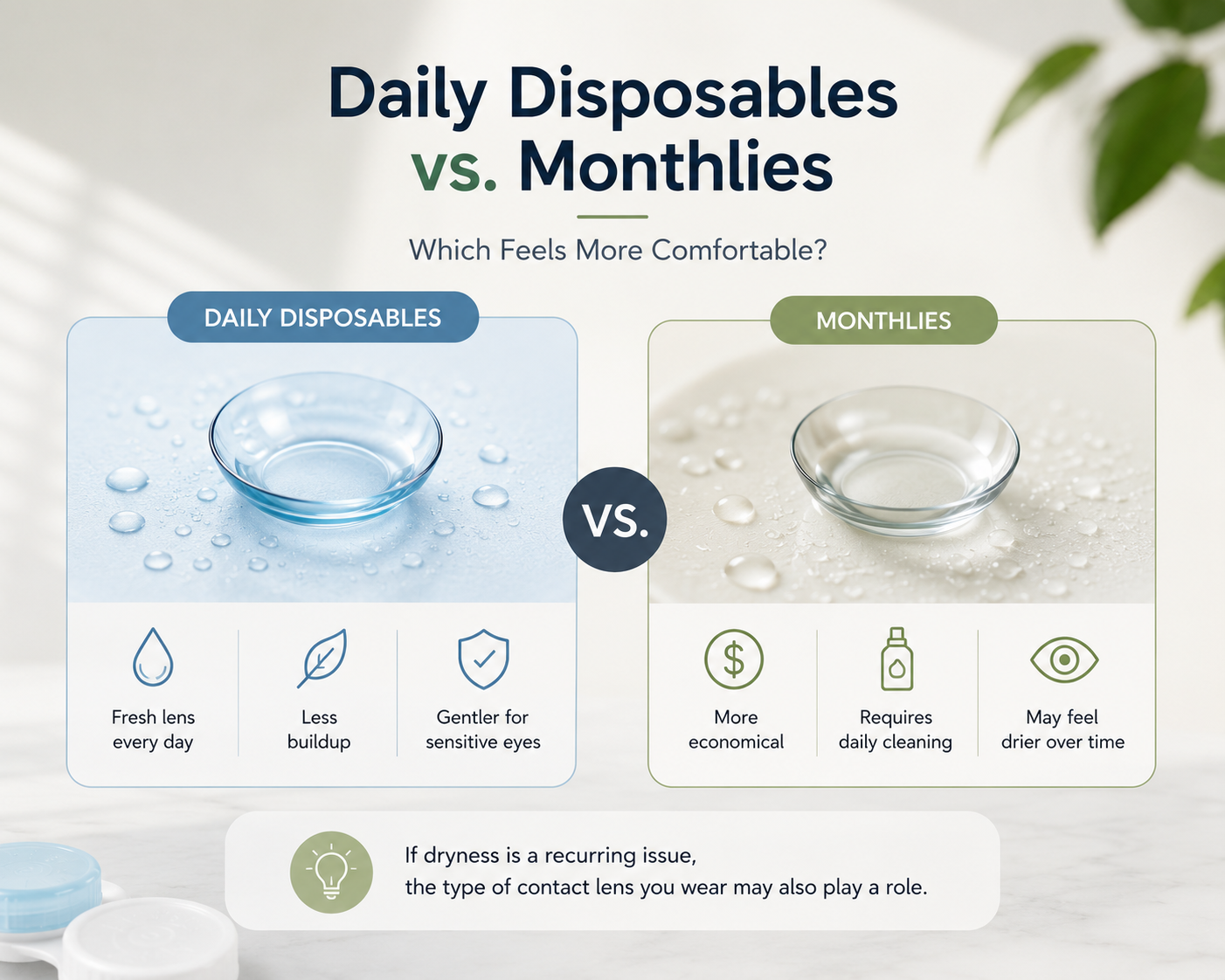
Daily Disposables vs. Monthlies: Which Feels More Comfortable?
If dryness is a recurring issue, the type of contact lens you wear may also play a role.
Daily Disposable Contact Lenses
Daily disposables are replaced with a fresh pair every day. Because they do not accumulate deposits from repeated wear, many people find them more comfortable, particularly towards the end of the day.
They can be a good option for individuals who:
- Experience mild dryness
- Spend long hours on screens
- Prefer a simple lens-care routine
Monthly Contact Lenses
Monthly lenses can also provide excellent vision and comfort when properly maintained. However, over time, deposits from tears, oils, and the environment may accumulate on the lens surface.
For some wearers, this can contribute to reduced comfort, especially during long digital workdays.
The most suitable option depends on factors such as your prescription, lifestyle, eye health, and wearing habits. A contact lens assessment can help determine which lens type is likely to provide the best experience for your eyes.
When Your Eyes Need More Than a Quick Fix
Occasional dryness after a long day at work is common. However, persistent symptoms deserve closer attention.
If you find yourself:
- Relying on lubricating drops several times a day
- Removing your lenses early because of discomfort
- Experiencing dryness every day
- Noticing redness or irritation regularly
- Feeling that your vision fluctuates frequently
it may be time for a professional evaluation.
Dryness is not always caused by contact lenses alone. Underlying dry eye disease, meibomian gland dysfunction, tear film instability, or other eye surface conditions may also be contributing factors.
A comprehensive dry eye assessment can help identify the underlying cause and guide treatment recommendations. In some cases, changes to your contact lens type, wearing schedule, or dry eye management plan can significantly improve comfort.
Comfortable Contact Lens Wear Is Possible
Long hours on screens do not automatically mean you have to give up contact lenses. For many people, improving blinking habits, taking regular visual breaks, optimizing their work environment, and wearing the right type of contact lens can make a meaningful difference.
If your contact lenses regularly feel dry, tired, or uncomfortable during screen-heavy days, it may be worth having your eyes assessed.
At People's Optics, our optometrists can evaluate your tear film, contact lens fit, and visual needs to identify factors affecting comfort. Whether you need advice on dry eye management, contact lens options, or workplace visual habits, we're here to help.